
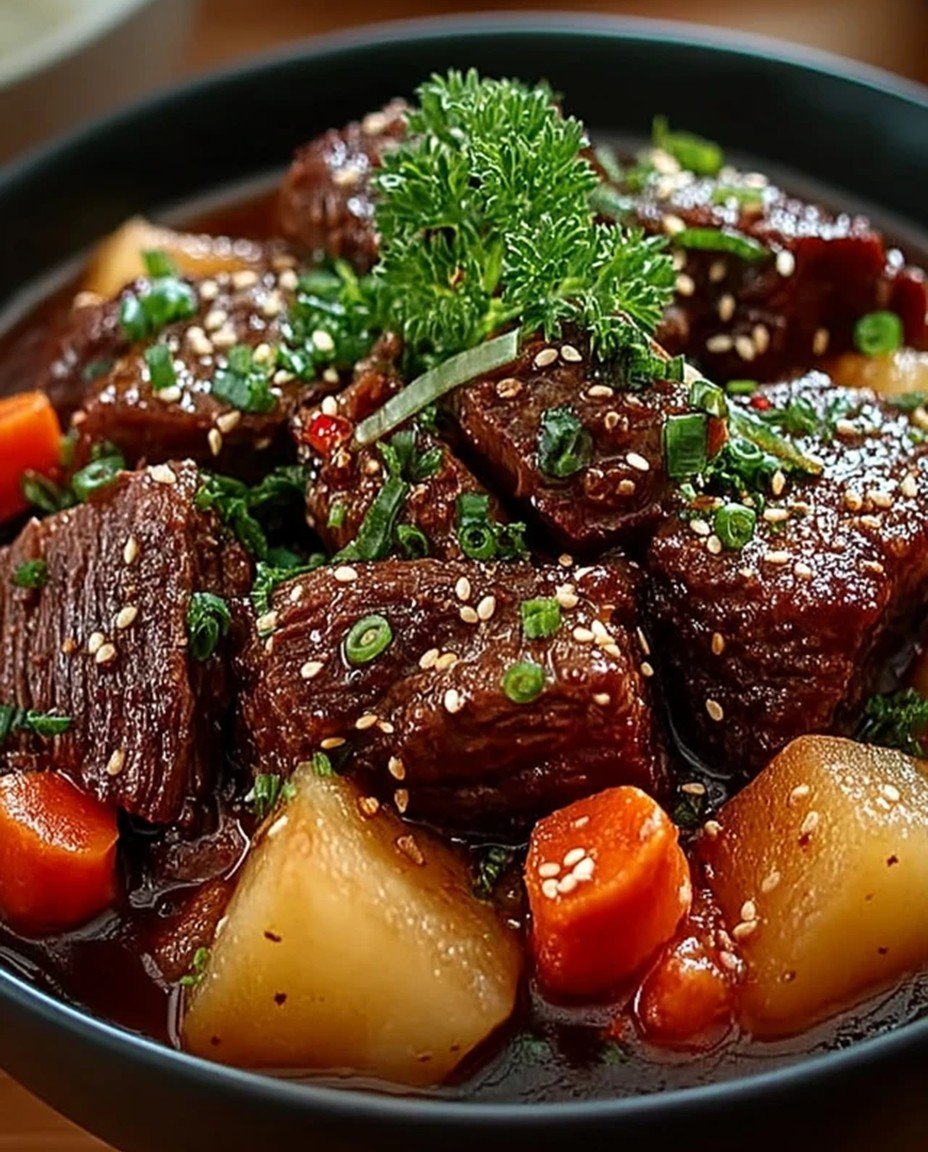
The caramelization of the onions creates a deep, savory base while the marbling in the beef infuses rich flavors that enhance each bite. This Korean Style Pot Roast recipe not only promises a satisfying meal but also reflects a culinary tradition that has brought families together for generations.
Originating from Korean cuisine, pot roast melds the essence of tender braised meat with vibrant, aromatic seasonings. The interplay of spices and slow cooking techniques elevate this dish to a family favorite, often served during gatherings that celebrate both food and community.
The Science of Flavor: Why This Works
Flavor layering is key in this Korean Style Pot Roast recipe. The balance of sweet soy sauce, salty miso paste, and the subtle heat from gochugaru creates a symphony of tastes that dance on your palate. Meanwhile, the contrasting textures—fall-apart tender beef against crunchy vegetables—ensure each mouthful is an adventure. This harmonious blend not only pleases the taste buds but also engages the senses through its variety.
Ingredients for Korean Style Pot Roast Recipe
To achieve the perfect chemical balance, you need:
- Beef Chuck Roast – This cut has ample marbling which renders down during cooking, resulting in tender and juicy meat.
- Soy Sauce – Provides umami depth while balancing sweetness; opt for low-sodium versions to control saltiness.
- Miso Paste – Fermented soybean paste adds complexity and richness; it acts as both flavor enhancer and thickener.
- Gochugaru (Korean Red Pepper Flakes) – Delivers mild heat and a smoky flavor; its coarseness contributes to texture.
- Onions – Essential for their natural sweetness; as they caramelize, they deepen the overall flavor profile.
- Garlic – Adds aromatic sharpness; helps round out flavors by providing a pungent kick.
- Carrots – Their sweetness contrasts beautifully with savory elements while adding color and nutrition.
- Cilantro – A fresh herb garnish that brightens up the dish and balances rich flavors when sprinkled on top before serving.
- Vegetable Broth – Acts as a braising liquid; it absorbs the meat’s juices while infusing additional flavor.
Full quantities are in the recipe card below.
Perfecting the Method for Korean Style Pot Roast Recipe
Follow this precise sequence for optimal results:
Step 1: Sear the Beef
Begin by heating a large Dutch oven over medium-high heat until it’s hot. Add oil, then sear the beef chuck roast on all sides until golden brown. This step is crucial as it develops a deep crust through the Maillard reaction, enhancing flavor.
Step 2: Sauté Aromatics
Remove the beef from the pot and set aside. In the same pot, add sliced onions and minced garlic. Sauté until translucent and fragrant, about five minutes. This creates a flavorful base that will deepen as it cooks.
Step 3: Deglaze with Broth
Pour in vegetable broth to deglaze, scraping up any browned bits from the bottom of the pot. These bits are packed with flavor; incorporating them enriches the overall dish.
Step 4: Add Seasonings
Stir in soy sauce, miso paste, carrots, and gochugaru. Mix well to ensure even distribution of flavors. Each ingredient plays a role: miso thickens while soy sauce enhances umami depth.
Step 5: Braise
Return seared beef to the pot, ensuring it’s submerged in liquid. Bring to a simmer before covering with a lid and reducing heat to low. Braise for approximately three hours or until fork-tender. Low-and-slow cooking allows connective tissues to dissolve into gelatinous goodness without toughening meat fibers.
Step 6: Finish and Serve
Once cooked through, remove from heat and let rest for about 15 minutes before slicing. This resting period allows juices to redistribute within the meat ensuring maximum tenderness upon serving. Garnish with freshly chopped cilantro just before plating.
For an optimal experience, serve warm alongside steamed rice or nestled within soft tortillas for added texture contrast—the creamy rice or fluffy tortilla beautifully complements the rich pot roast.
This Korean Style Pot Roast recipe offers not just nourishment but also an exploration into how ingredients interact at both chemical and sensory levels—making every bite an engaging experience filled with layered flavors and delightful textures.
The Chemistry of Cooking
The critical moment in the cooking process for the Korean Style Pot Roast Recipe occurs when the meat reaches a perfectly tender state. The enticing aroma of caramelization fills the air, signaling that the Maillard reaction has created a beautifully browned crust, enhancing both flavor and visual appeal.
Flavor Profile Customizations
To increase acidity, replace rice vinegar with apple cider vinegar for a milder taste. For a denser texture, substitute regular soy sauce with a thicker tamari, which adds depth without overwhelming the dish.
Preserving Texture and Taste
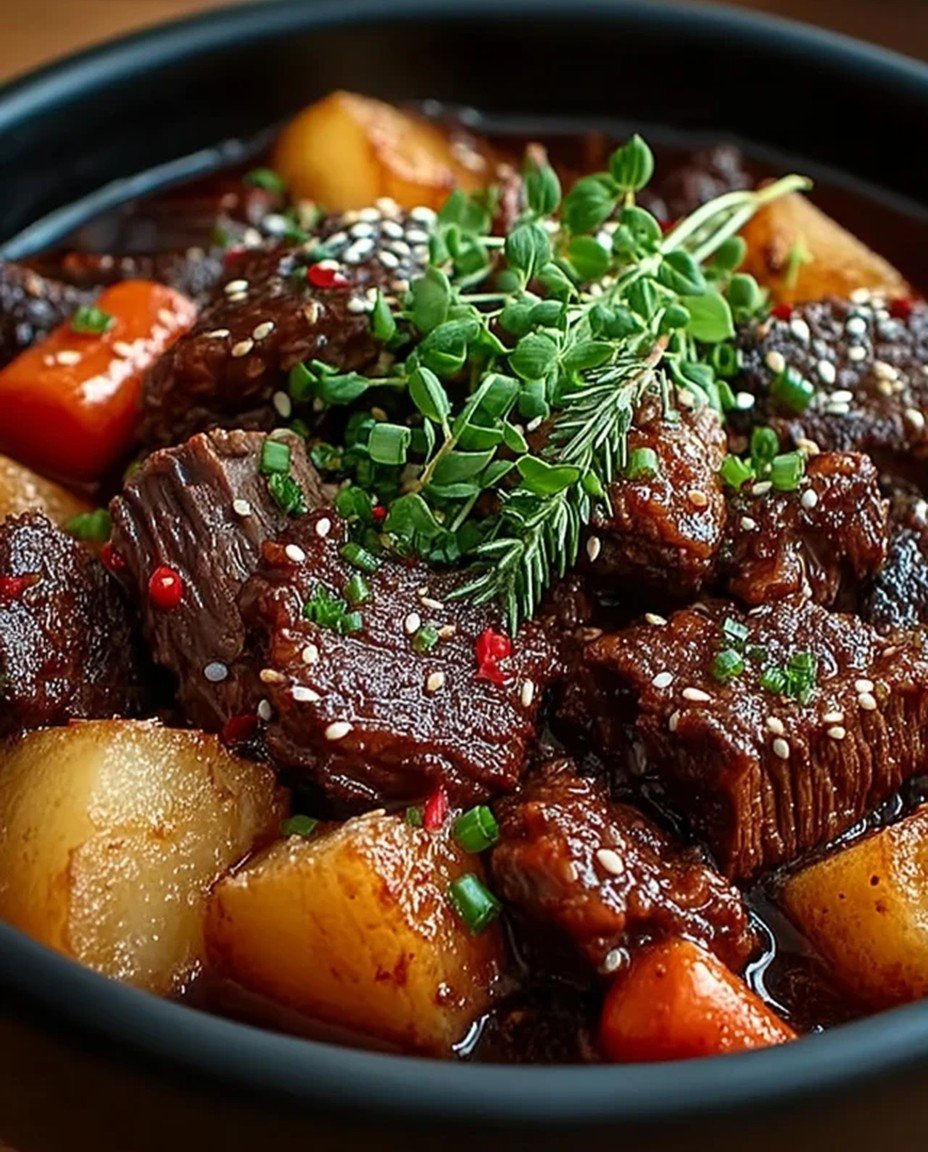
To prevent moisture migration and maintain quality, store the pot roast in an airtight container. Ensure it cools to room temperature before sealing to minimize condensation, which can lead to sogginess and flavor loss.
Chef’s Technical Tips
- Allow meat to rest after cooking; this enhances juiciness as juices redistribute throughout.
- Use a heavy-bottomed pot to ensure even heat distribution and prevent scorching.
- Incorporate aromatics early in the sautéing process for intensified flavors and fragrant results.
Mastering this technique not only elevates your culinary skills but also brings immense satisfaction as you create a dish that delights friends and family alike.
Conclusion for Korean Style Pot Roast Recipe
In this Korean Style Pot Roast Recipe, you’ll discover a delightful fusion of tender meat and savory flavors that will make your taste buds dance. With its rich broth and aromatic spices, this dish brings warmth and comfort to your table. It’s perfect for family gatherings or a cozy night in. Don’t wait any longer—gather your ingredients and experience the hearty goodness of this pot roast. Your loved ones will be asking for seconds, so give it a try today!
Print
Korean Style Pot Roast Recipe
- Total Time: 3 hours 30 minutes
- Yield: 4 servings 1x
Description
This Korean Style Pot Roast features tender beef chuck roast, slowly braised to perfection with a flavorful blend of sweet soy sauce, savory miso paste, and a hint of heat from gochugaru. The caramelized onions create a rich, aromatic base, while crunchy vegetables add delightful texture. This comforting dish is perfect for family gatherings, showcasing the essence of Korean cuisine and bringing loved ones together over a satisfying meal. Ideal for dinner, it combines tradition with vibrant flavors that delight the senses.
Ingredients
- 1 beef chuck roast
- 1/2 cup soy sauce, low-sodium
- 1/4 cup miso paste
- 2 tablespoons gochugaru (Korean red pepper flakes)
- 2 onions, sliced
- 4 cloves garlic, minced
- 2 carrots, chopped
- 1/4 cup cilantro, for garnish
- 2 cups vegetable broth
Instructions
- Heat a large Dutch oven over medium-high heat until it’s hot.
- Add oil and sear the beef chuck roast on all sides until golden brown.
- Remove the beef from the pot and set aside.
- In the same pot, add sliced onions and minced garlic.
- Sauté the onions and garlic until translucent and fragrant, about five minutes.
- Pour in vegetable broth to deglaze, scraping up any browned bits from the bottom of the pot.
- Stir in soy sauce, miso paste, carrots, and gochugaru.
- Mix well to ensure even distribution of flavors.
- Return the seared beef to the pot, ensuring it is submerged in liquid.
- Bring to a simmer before covering with a lid and reducing heat to low.
- Braise for approximately three hours or until fork-tender.
Notes
Storage: Allow the Korean style pot roast to cool completely before transferring it to an airtight container. It can be stored in the refrigerator for up to 3-4 days or frozen for up to 3 months. If freezing, consider portioning it into smaller containers for easy reheating.
Reheating: To reheat, thaw the frozen pot roast in the refrigerator overnight. Heat it gently on the stovetop over low heat, adding a splash of vegetable broth to prevent drying out. Alternatively, you can microwave it in intervals, stirring occasionally, until heated through.
Serving: Serve the pot roast hot, garnished with chopped cilantro. Pair it with steamed rice or noodles to soak up the flavorful sauce, and consider offering kimchi or pickled vegetables on the side for a traditional Korean touch.
Chef’s Tip: For enhanced flavor, marinate the beef chuck roast in the soy sauce, miso paste, and gochugaru mixture for a few hours or overnight before cooking. This allows the meat to absorb the flavors more deeply, resulting in a richer dish.
- Prep Time: 30 minutes
- Cook Time: 180 minutes
- Category: Main Dishes
- Method: Braten
Nutrition
- Calories: 350 kcal
- Sugar: 0
- Sodium: 600mg
- Fat: 15g
- Carbohydrates: 20g
- Fiber: 3g
- Protein: 30g
- Cholesterol: 0
FAQs
What type of meat works best for the Korean Style Pot Roast Recipe?
For the Korean Style Pot Roast Recipe, beef is an excellent choice, as it becomes tender during cooking and absorbs all the delicious flavors. You can also opt for lamb or turkey if you prefer a different taste. Just ensure that the meat is cut into suitable pieces to allow even cooking.
Can I use a slow cooker for this recipe?
Yes, you can use a slow cooker for the Korean Style Pot Roast Recipe! Simply follow the same steps but adjust the cooking time. Cook on low for about 6-8 hours or on high for 4-5 hours until the meat is tender and flavors have melded beautifully.
How do I store leftovers from the Korean Style Pot Roast?
To store leftovers from your Korean Style Pot Roast Recipe, let them cool completely before transferring them to an airtight container. Refrigerate for up to 3-4 days. You can also freeze the pot roast in a freezer-safe container for up to 3 months, ensuring that you can enjoy this comforting dish later!
What sides pair well with Korean Style Pot Roast?
The Korean Style Pot Roast pairs wonderfully with steamed rice or mashed potatoes to soak up the flavorful broth. Additionally, roasted vegetables or a fresh salad can provide a nice contrast in texture and flavor. Feel free to get creative with sides that complement the rich taste of this dish!




Leave a Comment